
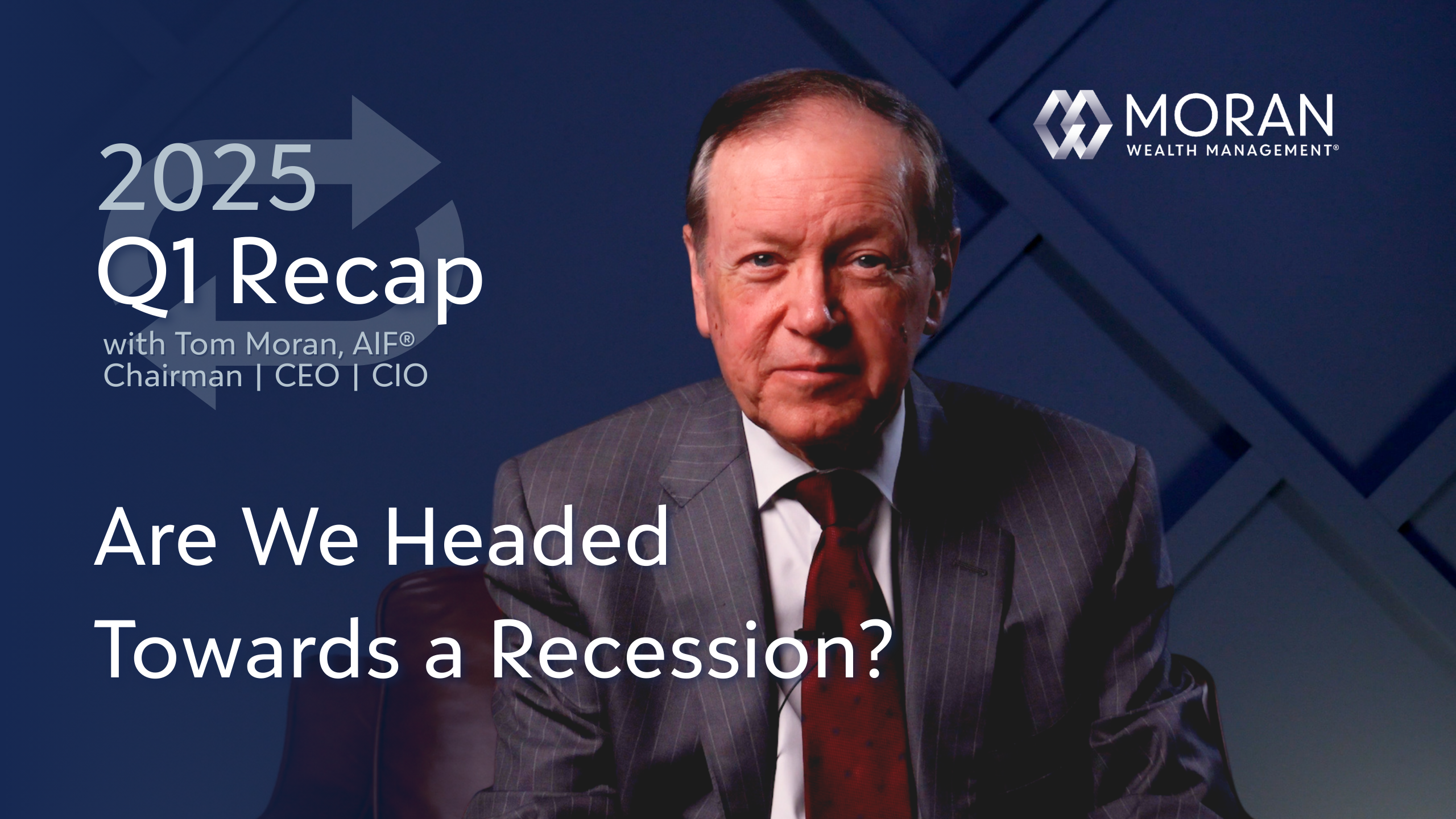
Every market cycle challenges investors to remain steady in the face of change. The first quarter served as a reminder that patience and perspective are often among the most important qualities of disciplined investing.
As headlines centered on tariffs, interest rate discussions, and the pace of global growth, the market continued to evolve in complex ways. In a recent roundtable discussion, Tom Moran, Don Drury, and Charles Chesebrough of Moran Wealth Management® reflected on the lessons that emerged from the quarter and what those developments reveal about maintaining a thoughtful, long-term view.
Looking Beyond the Headlines
Moran observed that despite concerns about market concentration, there were encouraging signs within the data. Earnings improved, valuations moderated, and certain sectors began to participate more broadly. While technology companies continued to influence overall market performance, Moran noted that there were early indications of diversification within market leadership.
Both Moran and Chesebrough discussed the resilience of the broader economy. Growth had slowed, but it remained steady, and inflation pressures were not as severe as initially feared. Earnings projections fluctuated as analysts reassessed the potential impact of tariffs, yet corporate fundamentals showed adaptability. Moran explained that if a slowdown were to occur, it could be moderate and short in duration rather than deep or prolonged.
Understanding Policy and Patience
The conversation turned to monetary policy and the Federal Reserve’s approach to balancing economic stability with inflation control. Moran acknowledged that while he had not always agreed with the Fed’s timing, Chair Jerome Powell’s caution might be justified. “Once you get inflation going, it’s hard to put that genie back in the bottle,” he remarked.
Chesebrough added that the data remained mixed, with differing signals from employment, production, and inflation indicators. Both emphasized that the Fed’s deliberate pace reflected a data-driven process rather than a reactive one. With inflation still being evaluated and the labor market near full employment, they viewed restraint as a prudent course of action.
Positioning with Purpose
When considering portfolio positioning, Moran described a careful and incremental approach. He shared that he had been gradually increasing exposure to international markets and exploring opportunities among mid- and small-cap companies. These areas, he suggested, might warrant attention for investors with longer time horizons once greater clarity emerges in trade and policy developments.
Chesebrough agreed that such segments could benefit from renewed confidence, but he also reminded listeners that market leadership often shifts gradually. Both highlighted the importance of patience and diversification rather than attempts to anticipate short-term market turns.
The Challenge of Market Timing
Drury observed that it can be easy to exit the market during volatile periods, but it is much harder to determine when to re-enter. Moran reflected on his decades of experience, noting that while markets fluctuate, investors who maintain a disciplined strategy are often better positioned to participate in recovery periods.
For retirees and those transitioning into retirement, both Moran and Chesebrough emphasized the importance of maintaining liquidity and a source of income during market downturns. They discussed the value of having a “cash reserve” or “rainy day bucket” that allows investors to meet near-term needs without disrupting their long-term investment allocations.
The Role of Innovation
The conversation also explored how emerging technologies, particularly artificial intelligence, are influencing productivity and operational efficiency across industries. Chesebrough described AI as part of a long historical progression of innovation, comparable to earlier periods such as the rise of industrial automation or the adoption of the internet. He noted that companies are finding new ways to apply AI to enhance processes and improve decision-making.
Moran agreed that while new technologies can temporarily disrupt labor markets, innovation tends to create new industries and long-term opportunities over time. He suggested that as adoption increases, organizations may experience efficiencies that allow more focus on client relationships and strategic planning.
Clarity Through Commitment
The first quarter highlighted an enduring truth: the future is uncertain, but the principles of sound investing remain consistent. Markets shift, policies evolve, and innovation accelerates, yet disciplined planning, thoughtful diversification, and informed decision-making remain the foundations of long-term success.
At Moran Wealth Management®, we believe that clarity and education empower investors to make informed decisions. By focusing on process rather than prediction, investors can approach uncertainty with perspective and purpose.
We understand that very investor’s path is unique. Let’s start a conversation about yours. Schedule a complementary consultation here.
The content on this page and/or video is for educational purposes only and should not be construed as investment advice. Specifically, the content is intended to provide education and tools for individuals looking to handle their retirement planning on their own. Should you need personalized investment advice, you should consult with a registered investment adviser. Any communications on this page with other individuals that are not associated with Moran Wealth Management, LLC are done voluntarily by users and are unsupervised and unaffiliated with Moran Wealth Management, LLC and Moran Wealth Management, LLC has no responsibility or liability over any discussions or advice that may be given. Moran Wealth Management, LLC is a registered investment adviser and can provide investment advice. If you are interested in Moran Wealth Management, LLC’s advisory services, you can contact us at 239-920-4440 or info@moranwm.com.
For disclosures, visit: MoranWM.com/disclosures